White Noise vs Nature Sounds: Which to Choose as Background
Rain, waves, and wind feel more familiar than an even white noise, but they don't always do the same job. Here's what they share and when each one makes more sense.
Last reviewed: September 23, 2026
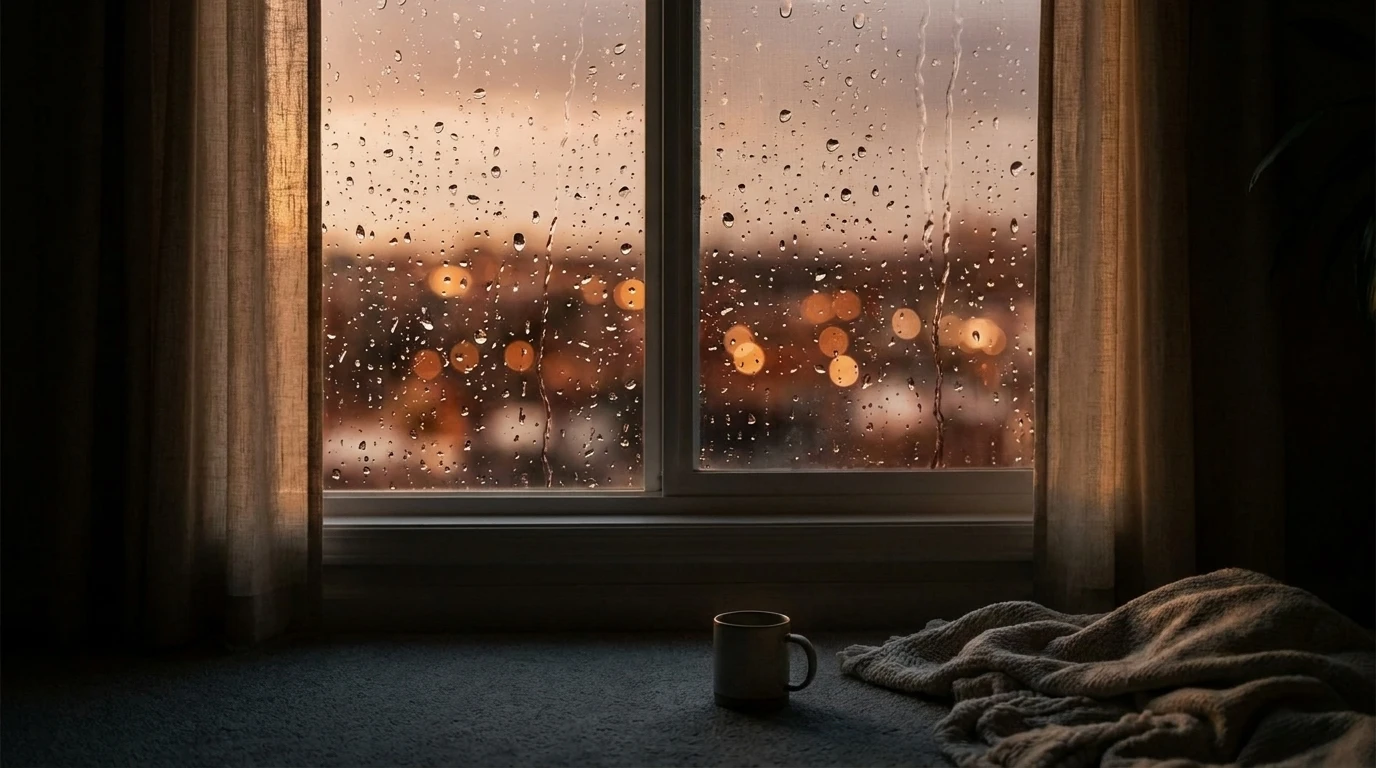
Anyone looking for background sound to relax or sleep almost always lands on the same fork in the road: an even, synthetic white noise, or something that sounds like rain, waves, or wind through the trees? Both options serve a similar purpose — giving you a continuous background that occupies the space your attention would otherwise go looking for something else — but they get there in different ways, and it’s worth understanding the difference before choosing.
What They Have in Common
Both are, at bottom, a continuous floor of sound. Whether synthetic or recorded, what they do is occupy the frequency range where your attention would otherwise latch onto something else — street traffic, an internal ring, the silence of the night itself. As we cover in more detail in white, pink, and brown noise, the goal of any of these background sounds isn’t to drown everything out by force, but to blend with the environment at the lowest volume that gets the job done.
White Noise: Even, Predictable, No Surprises
White noise spreads the same energy across every frequency, so it sounds bright and constant from start to finish: no peaks or variations to grab your attention. That predictability is exactly its strength for covering unpredictable outside noise — a car horn, a hallway conversation — because there’s never a moment where it “lets its guard down.” The flip side of that same quality is that, for some ears, it’s more tiring to sustain for hours on end, precisely because of how much high-frequency content it keeps constant.
Nature Sounds: Variable, Familiar, Textured
Rain, waves, wind through trees, a stream: they all share something white noise doesn’t have, which is variation. They aren’t perfectly even — one drop heavier than the next, a wave breaking differently — and for a lot of people that texture is easier to register as “something real” rather than a background recording. That familiarity can work in their favor: some people relax faster with a sound they recognize from a vacation or a walk than with a synthetic noise that has no reference point. For others, though, those same variations are exactly what makes them harder to tune out, because every change pulls attention back.
Which Covers Better, and Which Tires You Less
If you’re after even coverage against street or neighbor noise, white noise tends to be more direct because it covers the whole frequency range without exception. If instead you’re going to have the background sound running for hours at a stretch — a full night’s sleep, a long workday — a sound with fewer sustained highs, whether that’s pink noise or a calm nature sound, tends to be lighter to sustain. Neither one is objectively better: it depends on what you’re covering and how long you’ll have it running.
A Whole Catalog to Try
The only real way to know what works for you is to listen. In our sound catalog you can go through white, pink, brown, and other options to compare how each one sounds before deciding what to leave running tonight.
If you want to go a step further and listen to a background sound centered on your own tone instead of a generic one, you can build your sound profile right from your browser, no install needed, at my.tonaleve.app.
Frequently asked questions
- Does white noise help tinnitus?
- Yes, it's one of the most commonly used background sounds for it: by spreading energy across every frequency, it covers the range where a ring or a hum tends to sit well. It doesn't remove it, but it occupies the space your attention would otherwise go looking for it, which makes it less noticeable.
- Nature sounds vs white noise for tinnitus: which is better?
- Both work, and the choice is usually more about taste and habit than a fixed rule. White noise is more even and predictable; nature sounds have variations that some people find more relaxing and others find slightly more distracting.
- White noise or nature sounds for sleep?
- Both work, and the choice usually comes down to preference more than a fixed rule. White noise is more even and predictable; nature sounds carry variations that relax some people and distract others a little more.
- Why do rain or ocean sounds feel more relaxing than a generic noise?
- Partly it's familiarity: these are sounds most people associate with actual moments of rest, not just a recording. They also carry a texture with small variations — a heavier drop, a wave breaking differently — that a flat synthetic noise doesn't have.
- Do nature sounds cover street noise well?
- It depends on the sound. One with more high-frequency presence, like heavy rain, covers traffic or voices better than a mostly low one, like distant ocean sound. White noise, by spreading energy across the whole spectrum, tends to be more consistent for that.
Keep reading

Tinnitus and Anxiety: Why Stress Makes the Ringing Louder
During tense weeks or after a few short nights, the ringing seems louder even though nothing changed. Here's why that happens, what to do with your sound environment, and when to see someone.

That Ringing Only You Can Hear Has a Name: Tinnitus
If you hear a ringing, a hiss or a buzz that nobody else does, you're not making it up and you're not losing your mind. It's called tinnitus, it's very common, and there are concrete things you can do.

Hz, dB and dB SL, Explained Without the Math
Three words that come up constantly when people talk about sound, explained with everyday examples and no formulas, so you know what's shaping your sound profile.