Choosing well
Best Tinnitus Apps in 2026: A Guide to Comparing Them
A factual rundown of sound apps for ringing in the ears, with what each one offers and which platforms it runs on. Includes Tonaleve, which is our app.
How each kind of noise sounds, what a notched filter actually does, why the background is louder at night, and how to build a sound environment for sleep.
A factual rundown of sound apps for ringing in the ears, with what each one offers and which platforms it runs on. Includes Tonaleve, which is our app.
Adding a background sound and cutting a narrow band around your tone are two different roads to the same goal. Here's how each one works and when to choose one over the other.
A sound app and a hearing aid with a tinnitus program aren't competing for the same job: they start from different needs. Here's what each one solves and when it makes sense to combine them.

Rain, waves, and wind feel more familiar than an even white noise, but they don't always do the same job. Here's what they share and when each one makes more sense.

During tense weeks or after a few short nights, the ringing seems louder even though nothing changed. Here's why that happens, what to do with your sound environment, and when to see someone.
Leaving the sound on until morning and cutting it with a timer are not the same call, and the answer depends on when you wake up. Volume, headphones, and what to do at 3 a.m.

If you hear a ringing, a hiss or a buzz that nobody else does, you're not making it up and you're not losing your mind. It's called tinnitus, it's very common, and there are concrete things you can do.

Before you pick a background sound for sleep, it helps to notice which noises actually reach your bedroom and when. Here's how to build that environment, step by step.
The problem is rarely the bed itself, it's what you're doing ten minutes before. A short, no-lecture routine to get into bed already halfway settled.

Why a nearby conversation breaks your focus far more than an air conditioner at the same volume, and how to pick a background that helps instead of stealing your attention.

A generic background noise track is enough for plenty of situations, and it's free. Here's where it starts to fall short and what changes once sound is centered on your tone.
The same audio doesn't sound the same through two different headphones, and at night that matters even more. What to look for in fit, cable, and noise cancellation.
Three words that come up constantly when people talk about sound, explained with everyday examples and no formulas, so you know what's shaping your sound profile.
Tonaleve doesn't play back a recorded file: it builds the sound on the spot, from your profile. Here's what that means for data, dropouts, and battery.

Ear care isn't about a single loud peak, it's about the combination of how loud and for how long. Simple everyday signs that tell you when to dial it back.
Before you pay for a sound subscription to relax or sleep, there are six questions worth asking. They apply to any app in the category, not just ours.

Your tone and sound program stay on your device; our servers hold only what's needed to run your account. Here's what's what, and what we don't do with it.
The volume of your background sound matters as much as the sound itself. Why it pays to look for the lowest level that works, not the highest.

Adding a background sound doesn't cover anything up: it changes what your ear is able to distinguish. Here's why that makes all the difference.
A notched filter cuts out a narrow band of frequencies right at your tone and lets everything else through. Here's how it's built and why the center has to be yours.
No new sounds show up at night: the background noise that used to cover them drops. Here's why that happens and what to do about your sound environment.
White, pink, and brown aren't just color names: each one distributes sound energy differently and sounds different to the ear. Here's how to tell them apart and when to choose each one.

Before playing any sound, Tonaleve has you choose between pairs of sounds to build your sound profile. Here's what happens in those first few minutes and what each step is for.
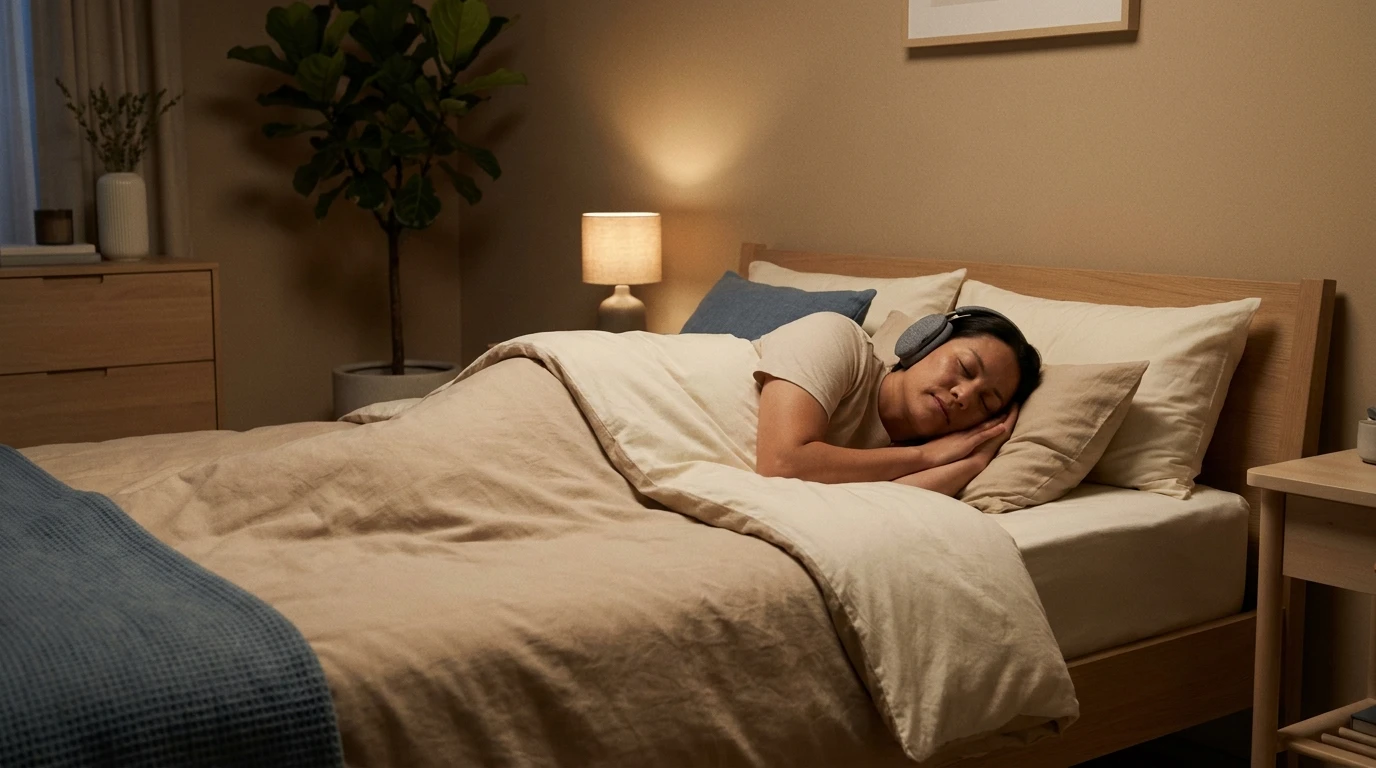
The program is calibrated to your tone and your listening level, starts at the volume you chose, and turns off on its own when the session ends. The next day you see how much you listened, with nothing to log.
Open Tonaleve in your browser and build your sound profile and sound program in minutes. Nothing to install.
Start free now