Brown Noise for Sleep, Focus and Tinnitus Masking
Play brown noise free, right in your browser. Why it's the deepest of the three colors, when it helps you focus or sleep, and what volume to use.
Brown noise takes pink noise's treble roll-off a step further: it has almost no high-frequency content, leaving a deep, heavy sound closer to a distant waterfall or the low rumble of a plane engine heard from several rows back.
Quite a few people find it the most relaxing of the three colors precisely because there's no sharp component to grab your attention. For the same reason, it tends to be the one most often picked for focus: it sits in the background asking for almost nothing.
Ready to play. Start low, then raise it if you need to.
Generated right in your browser — nothing downloaded, no audio sent anywhere.
Build my sound profile in Tonaleve
How it sounds
It sounds deep and muffled, with almost no treble — closer to a distant engine or a waterfall than to radio static. Next to white and pink noise it feels "heavier," and on small speakers — laptop or phone — it can sound thin, because those speakers cut the low end.
When to use it
- Focusing on a task without the background sound pulling your attention
- Studying something that requires reading or thinking, not just mechanical tasks
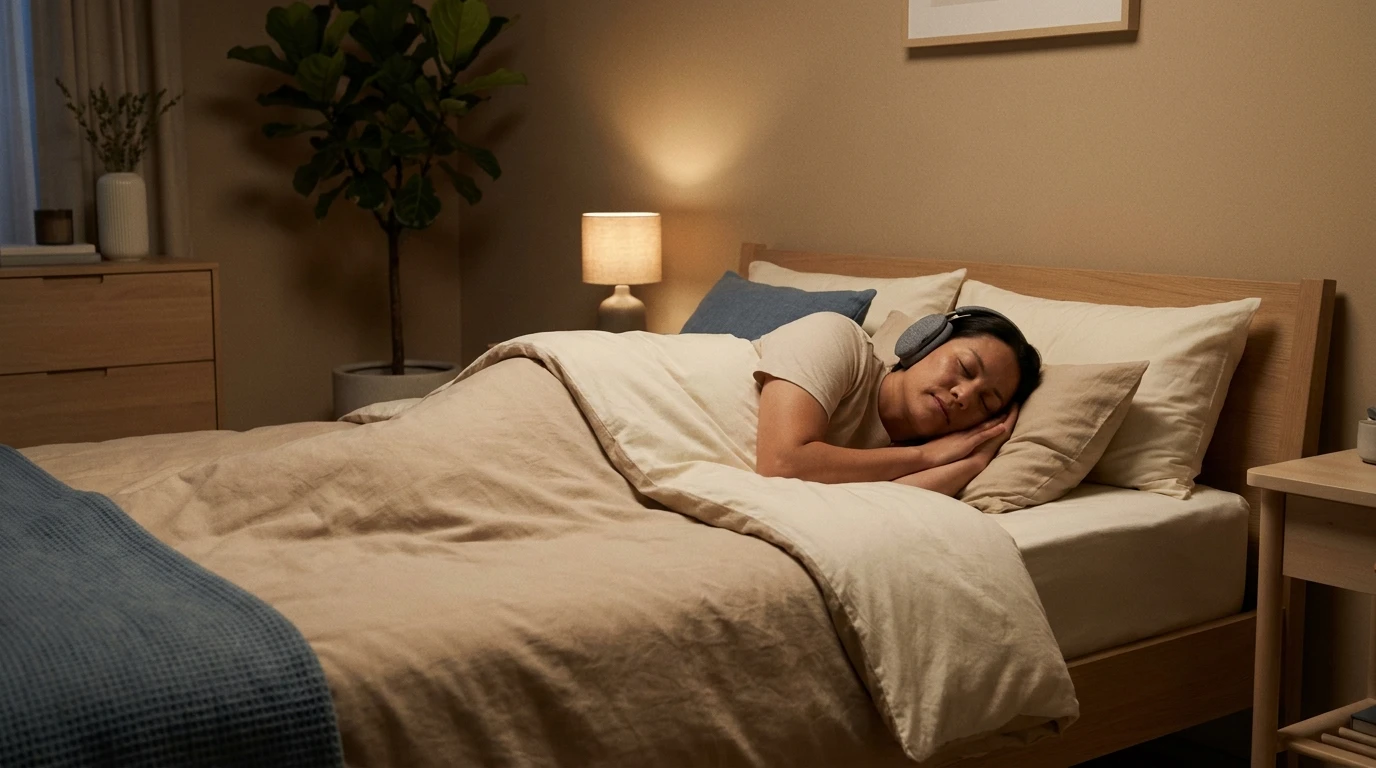
- Sleeping if you prefer a deep background over one with more treble
- Flights, trains, or long bus rides, to blend in with the low engine rumble
What volume to use
Because it's so deep, it can feel "soft" even when it's louder than you think. Try it first with the same headphones or speaker you normally use, and raise it gradually from a low starting point.
Keep reading
- White, Pink, and Brown Noise: How Each One Sounds and When to Use It
- What Volume to Play Background Sound At
- Should You Sleep With Sound All Night, or Turn It Off?
Frequently asked questions
- What is brown noise?
- It's the deepest of the three noise colors: it has almost no treble and concentrates its energy in the low frequencies. It's sometimes called red noise.
- Does brown noise help you focus?
- Many people choose it for exactly that reason: with no sharp treble to grab attention, it fades into the background more easily than white or pink noise while you study or work.
- Is brown noise better than white noise for sleep?
- Neither is universally better — it comes down to your ears. Brown noise is deeper and less "sharp," which some people find more relaxing; others find it heavy or not present enough. Trying both at low volume is the fastest way to find out which you prefer.
- What volume should I play brown noise at?
- The lowest level that does the job. Because it's deep, it's easy to turn up without noticing since it doesn't "pierce" the ear — pay attention that it still isn't drowning out normal conversation.
- Does brown noise help with tinnitus or ringing in the ears?
- A deep, steady background like brown noise can make ringing in the ears less noticeable while it plays, by adding another background sound. It doesn't treat or cure it — it's a masking tool, like any other noise color.