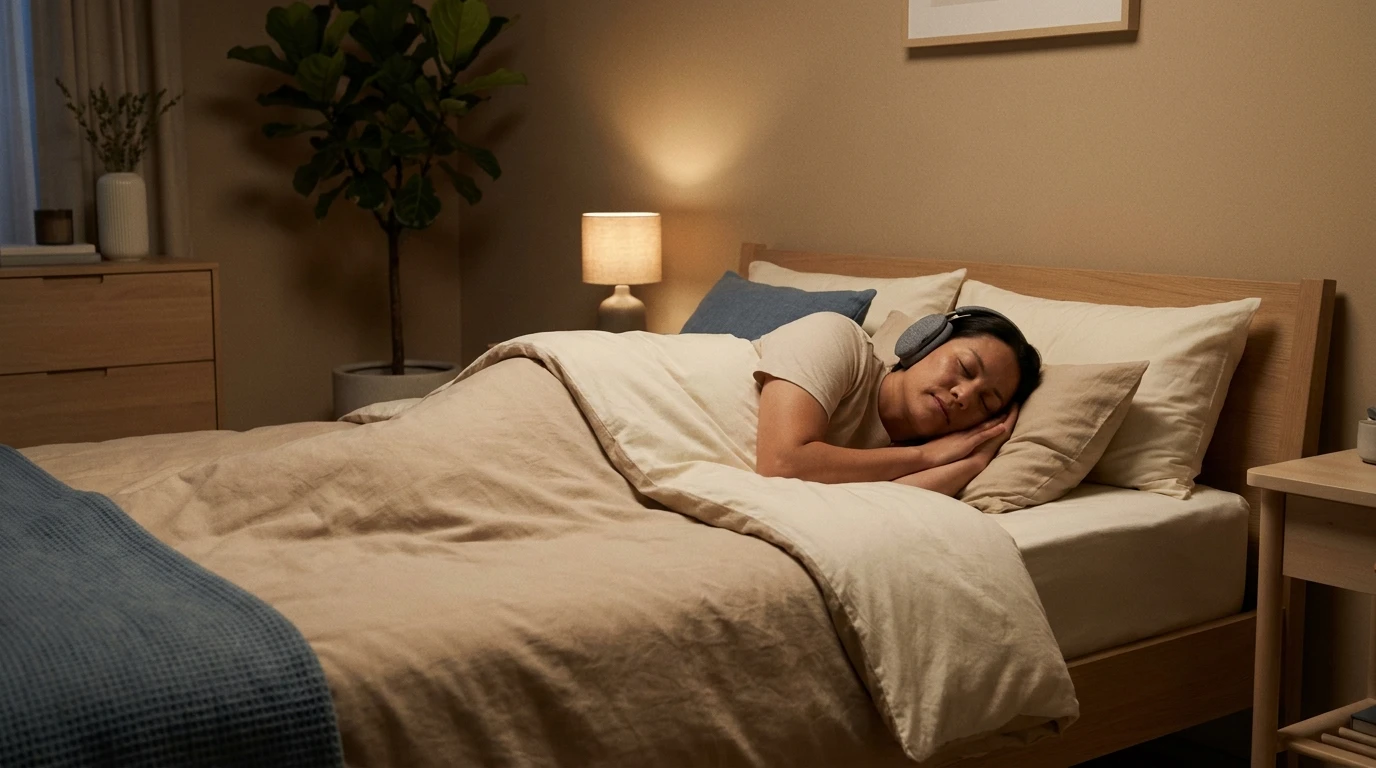
Why the Silence of the Night Feels Louder
No new sounds show up at night: the background noise that used to cover them drops. Here's why that happens and what to do about your sound environment.
Last reviewed: September 3, 2026
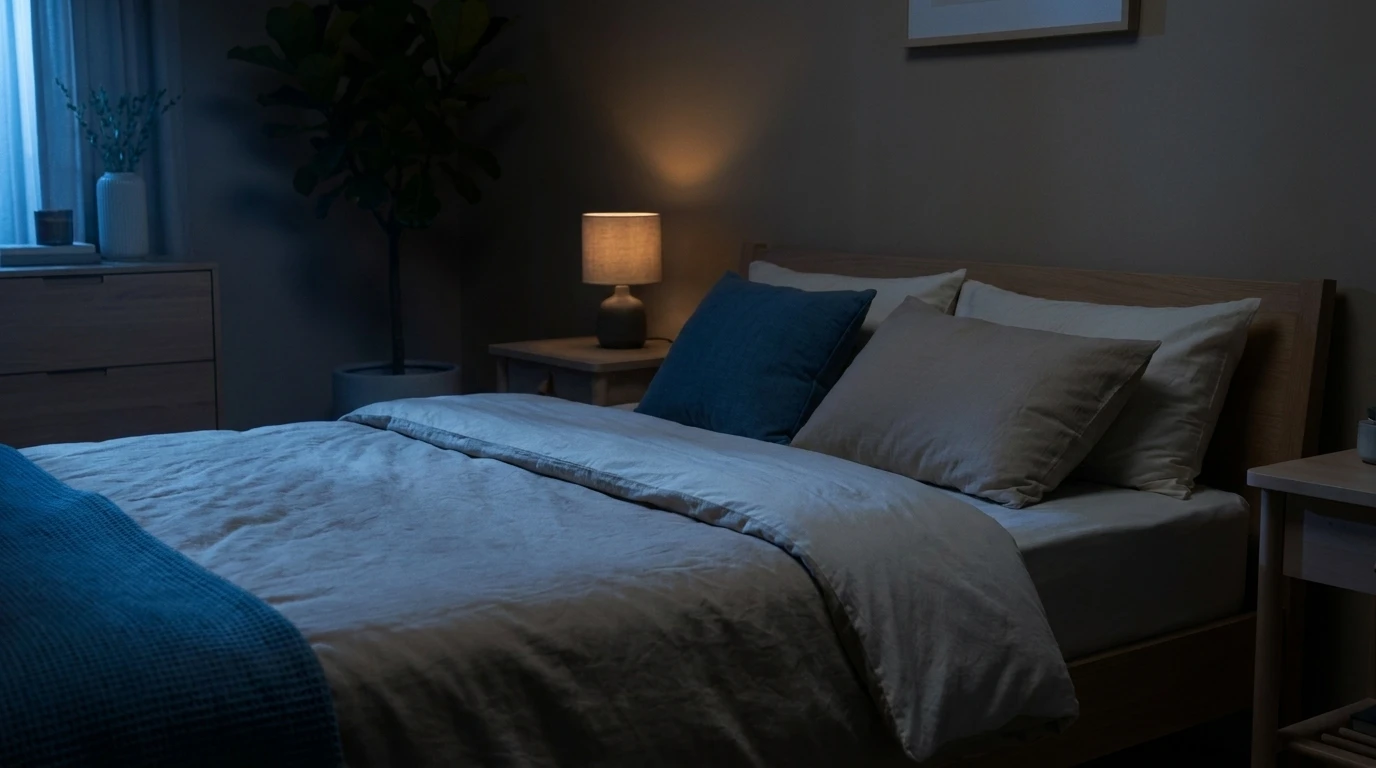
It’s such a common complaint that it barely needs explaining: during the day the house is in total silence and you don’t even notice, but the moment you turn off the light to sleep, a hum, a tick, a distant motor shows up that you’d swear wasn’t there before. The simplest explanation — and the most misleading one — is to think that sound came out of nowhere the moment night fell. In reality, it was almost always there the whole time. What changed was everything else.
Why Everything Sounds Louder at Night: the Noise Floor Drops
Any environment has an ambient noise floor: the sum of all the background sounds coexisting in a place at a given moment. During the day that floor is high because a whole bunch of things build it up at once — street traffic, the refrigerator, neighbors, people moving around, the general activity of a house that’s awake. That high floor works like a kind of blanket that naturally covers the softer sounds: if something sounds below that level, you simply don’t register it, even if it’s been sounding the whole time.
At night that blanket drops a lot. Traffic dies down, the refrigerator is one of the few motors still running, the house goes quiet. The noise floor falls several steps, and with it, so does the threshold needed to hear nothing. The soft sounds that used to be covered — the hum of an appliance, a pipe, the ventilation system — now sit above that lower floor, and that’s why they become noticeable. They didn’t get louder: what dropped was everything that used to cover them.
Attention Acts Like a Magnifying Glass
There’s a second part to the story that has less to do with the sound itself and more with how you listen to it. During the day your attention is split among a thousand things: a conversation, a screen, whatever you need to do next. At night, lying down in the dark, there’s almost nothing else claiming that attention, and the ear gets hooked on the little there is to listen to. The more focus you give a sound, the more present it becomes, and that presence reinforces the focus: it’s a loop that builds itself, not because the sound changed, but because you’re not giving it any competition.
It’s the same logic behind a clock on the wall that stops being heard when you’re focused on something and shows up again the moment you’re left with nothing to do. The sound never left: your attention did.
Do Sounds Really Travel Farther at Night?
Sometimes they genuinely do, and it isn’t your imagination. During the day the ground warms up and the air sitting on it ends up warmer than the air above, which bends sound upward, away from you. At night the ground cools down first and that layering inverts: the colder air stays below and the warmer air sits on top, so sound that during the day would have escaped upward gets bent back down toward the ground. A train, a highway, a dog a few blocks away can genuinely reach you at night and not during the day.
So two separate things stack on top of each other. The outside sound really does arrive with less loss, and the background that used to cover it is gone. Neither of them means anything is wrong with your hearing: both are describing the night, not you.
Why Bedtime Is Exactly the Worst Moment
If you had to deliberately design the worst possible moment to notice a background sound, it would look pretty much like this: you lie down, your posture changes, the day’s activity shuts off, and your mind is free of pending tasks for the first time in hours. Everything that competed for your attention during the day disappears all at once, right when the ambient noise floor is also at its lowest point. The two things that used to cover that sound — the noise around you and your own occupied attention — pull back at the same time, and what’s left feels much bigger than it actually is.
What to Do With Your Sound Environment, Instead of Chasing Silence
This is where a counterintuitive idea comes in: looking for more silence usually doesn’t help, because absolute silence is precisely the condition that leaves any soft sound with nothing to cover it. It makes more sense to work in the opposite direction, giving the ear back something similar to that daytime noise floor, but chosen by you: a soft, steady background sound that fills that empty space. It’s not about forcefully hiding anything, it’s about masking with an even background that gives the ear something stable to lean on, instead of being left alone with whatever stands out.
The key lies in the volume and in how that background is built. A sound that’s too loud is counterproductive: if the background competes in volume instead of accompanying, you end up with two sounds grabbing attention instead of one, and the result is worse than the silence you started with. The idea is a blended, low background that’s present without dominating the scene, and the decision left after that is how long to let it run: whether sleeping with sound in the background all night beats cutting it with a timer mostly depends on whether you wake up in the small hours. At Tonaleve we build our nighttime sessions with that logic — a sound program designed to accompany, not to impose itself — and if you’re curious about the criteria behind how each mode is built, we explain it in more detail on our methodology page.
A Background That Accompanies, Not a Silence to Chase
Understanding this changes quite a bit how you approach nighttime: you don’t need to “achieve” perfect silence, because that perfect silence is exactly what makes any soft sound stand out more. It makes more sense to think of your sound environment as something you manage, not something you eliminate. If you want to try it, you can build your profile and hear what a background designed to accompany the night sounds like, right from your browser, at my.tonaleve.app.
Frequently asked questions
- Why do sounds seem louder at night?
- Because the background drops, not because the sounds get louder. During the day traffic, voices, and appliances cover much of what is there; once all of that stops, the same sound as always is left sitting on a far quieter background and becomes easy to notice.
- Is it bad to sleep with background sound all night?
- It is a comfort choice, not a health one: plenty of people sleep with a soft, even sound without any trouble. Keep the volume low, keep the sound steady and free of sudden peaks, and make sure you are not having to turn it up night after night.
- Does leaving a fan on work as background noise?
- It does, and it is the homemade version of the same idea: a fan gives you a continuous, peak-free sound that raises the room's noise floor. The difference with a sound you choose is that you cannot tune its color or its level precisely.
- Do sounds really travel farther at night?
- Sometimes they do. During the day the warm air near the ground bends sound upward and away from you; at night the ground cools first, that layering inverts, and sound gets bent back down toward the ground instead of escaping. A distant train or highway can genuinely reach you at night and not during the day, on top of the background noise that is no longer there to cover it.
- Is it normal to hear a faint ringing once everything goes quiet?
- It is very common, and the silence of the night is when most people notice it. If the sound is constant and only you can hear it, that is what gets called tinnitus, and it is worth reading [what tinnitus is](/en/news/what-is-tinnitus/) before drawing conclusions. Noticing it at night does not mean it got worse: it means nothing is covering it.
Keep reading
Should You Sleep With Sound All Night, or Turn It Off?
Leaving the sound on until morning and cutting it with a timer are not the same call, and the answer depends on when you wake up. Volume, headphones, and what to do at 3 a.m.

How to Build a Sound Environment for Sleep
Before you pick a background sound for sleep, it helps to notice which noises actually reach your bedroom and when. Here's how to build that environment, step by step.

A Ten-Minute Wind-Down Routine Before Bed
The problem is rarely the bed itself, it's what you're doing ten minutes before. A short, no-lecture routine to get into bed already halfway settled.