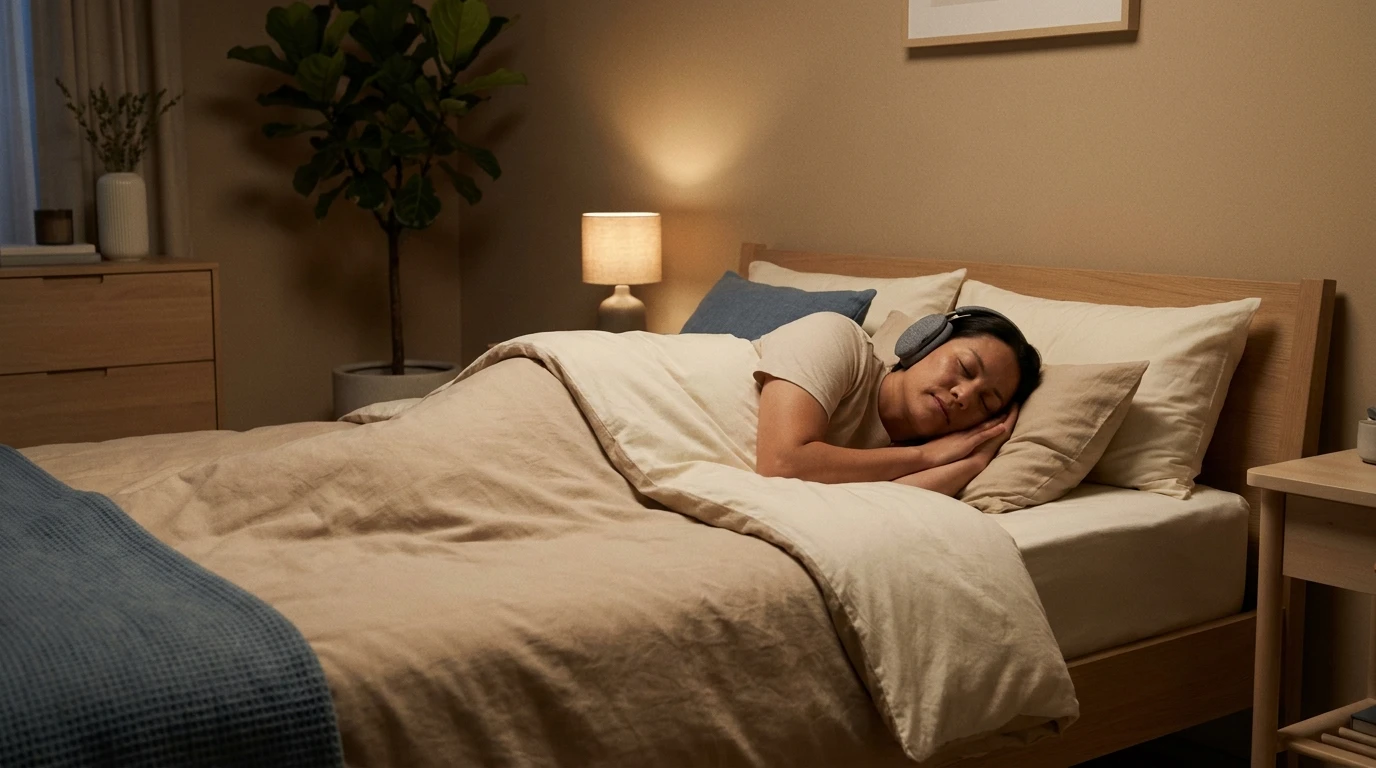
Headphones for Nighttime Listening: What to Look For
The same audio doesn't sound the same through two different headphones, and at night that matters even more. What to look for in fit, cable, and noise cancellation.
Last reviewed: September 7, 2026
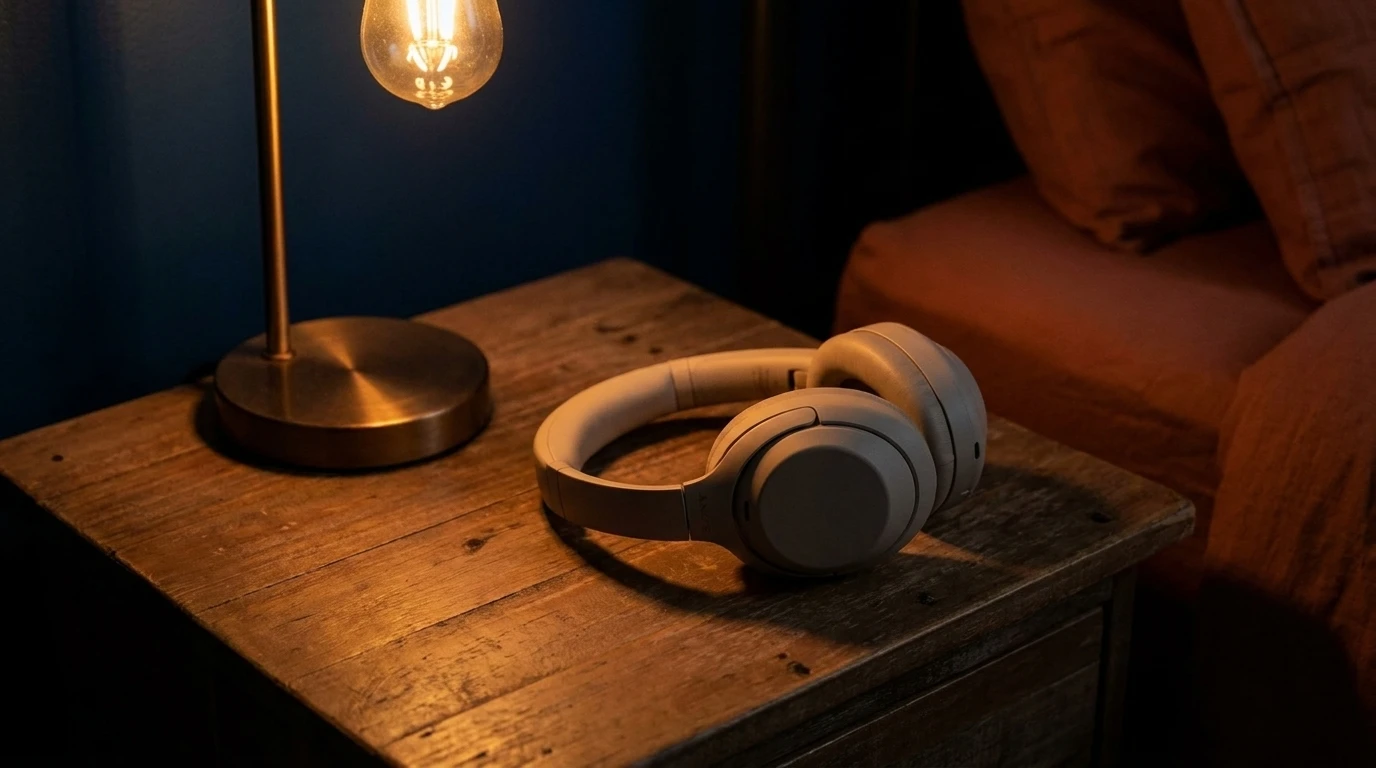
You probably don’t think much about which headphones you reach for at night — whatever’s closest, whatever you already wore all day, or whatever’s sitting in the nightstand drawer. But that choice matters more than it seems, because headphones aren’t just a neutral pipe for sound: they change quite a bit of what you actually hear.
Same Sound, Two Different Listens
If two people listen to the exact same audio through two different headphones, they’re not hearing the same thing. Every model has its own response curve: some push the low end forward, some cut it back, some soften the highs and others leave them front and center. The difference shows up most at the extremes — the low end that reads as a background hum, or the high end that feels sharp — which is why a sound that felt comfortable on one pair of headphones can feel heavier or sharper on another.
That’s why it’s worth building your sound profile with the same headphones you plan to use afterward, at the same time of day you’ll actually use them. If you calibrate with one pair and then listen through another, the tone and level the app found for you won’t be centered the same way anymore. It’s a small detail, but it changes the outcome.
Comfortable Sitting Up Is Not the Same as Comfortable Lying Down
Headphones can be great at a desk and a problem the moment you lie on your side. Over-ear headbands tend to press right where your ear meets the pillow. In-ear buds are light, but pressing into the ear canal for hours starts to bother some people, especially side sleepers. Then there are formats built specifically for sleep, with a wide fabric headband and flat speakers built in: they’re usually the most comfortable for lying down, though they almost always sound worse than conventional headphones, with less nuance and a narrower range. There’s also the option of a speaker pillow, which skips wearing anything on your head at all, at the cost of a more diffuse sound and anyone sharing the bed hearing it too.
None of these formats is universally right: it depends on how you sleep, how much you move during the night, and how much you value sound quality versus not feeling anything on your head at all.
Wired or Wireless: Pick Your Trade-off
Wired means no battery running out mid-session, but also a cable that can tangle around you or tug if you roll over. Wireless solves that, but adds a new variable: if the headphones die in the middle of the night, the background sound cuts out right when you need it most. If you go wireless, it’s worth charging fully before bed and not counting on it lasting all night just in case.
Active Noise Cancellation: Not Always the Right Call at Night
Active noise cancellation sounds like an obvious win for nighttime, but it cuts both ways. First, some people feel a kind of pressure in the ear, an odd emptiness, that goes unnoticed during the day but stands out more at night, with your head on a pillow and everything around you already quiet. Second, cancellation also cuts you off from sounds you might still want to hear: a doorbell, a kid in another room, an alarm. If covering street noise or a neighbor is your goal, a good background mask might be enough without active cancellation; if you do use it, it’s worth testing at low volume first to see how that sensation sits with you.
What Matters More Than Brand or Price
It’s tempting to shop by brand name or by how much bass a pair of headphones promises, but for nighttime listening two things matter far more: being comfortable for hours at a stretch, not just the first ten minutes, and sounding even across the whole range, without an exaggerated low end drowning everything else. Headphones with heavy bass can sound impressive for a quick test, but as background for a long session, that same bass gets tiring. A few things worth prioritizing:
- it shouldn’t press or heat up your ear after a while,
- it shouldn’t slip or shift if you change position,
- it should reproduce lows, mids, and highs evenly, without any one range jumping out over the others.
If you want to understand how the app uses your sound profile to adapt sound to what you’re actually listening through, we go over it on our methodology page.
A Word on Hygiene, Without Overthinking It
Wearing the same headphones for hours, every night, is different from wearing them for a bit during the day. You don’t need a special routine: cleaning them occasionally per the manufacturer’s instructions, letting them air out during the day, and not sharing them if you can avoid it covers it. It’s common sense, not a special precaution.
Choosing the right headphones doesn’t replace everything else — the tone, the level, the kind of sound you pick — but it’s the physical foundation everything else sits on. If you want to build your sound profile with the headphones you’ll actually use at night and hear how the result changes, you can do it right from your browser, no installation needed, at my.tonaleve.app.
Keep reading
Looking After Your Ears at Concerts, Worksites and in Headphones
Ear care isn't about a single loud peak, it's about the combination of how loud and for how long. Simple everyday signs that tell you when to dial it back.

Why the Silence of the Night Feels Louder
No new sounds show up at night: the background noise that used to cover them drops. Here's why that happens and what to do about your sound environment.
Should You Sleep With Sound All Night, or Turn It Off?
Leaving the sound on until morning and cutting it with a timer are not the same call, and the answer depends on when you wake up. Volume, headphones, and what to do at 3 a.m.