Looking After Your Ears at Concerts, Worksites and in Headphones
Ear care isn't about a single loud peak, it's about the combination of how loud and for how long. Simple everyday signs that tell you when to dial it back.
Last reviewed: September 7, 2026
You leave a show and the world feels muffled for a while. You spend an afternoon next to a power drill on a job site. You put your headphones on the moment you wake up and don’t take them off until night. None of these feels like a big deal on its own, and it probably isn’t. The issue is rarely the single moment — it’s the habit that repeats without you noticing, and some habits add up more than they seem to.
It’s Not the Peak, It’s the Combination
It’s tempting to think about ear care in terms of peaks: the instant a speaker gets too close, or the split second a power tool makes a sharp, loud sound. But what actually matters is something else: the combination of how loud something is and how long you’re exposed to it. A short burst that’s very loud and a full afternoon at a moderate level can end up adding up to something similar, even though the second case doesn’t feel as dramatic while it’s happening. It helps to worry less about “this is really loud” and more about “how long have I been in this.”
Everyday Signs a Place Is Too Loud
You don’t need a meter to tell when a place is too loud. Your body gives you fairly concrete signs on its own:
- You have to shout for someone an arm’s length away to hear you.
- You leave the place with your ears feeling “off,” almost like they’re stuffed with cotton.
- After a while, you can’t quite make out conversations around you anymore.
None of these signs need a number to count. If it’s happening to you, that’s already enough information to step back, move away a bit, or head outside for a few minutes.
Concert Earplugs Aren’t a Rolled-Up Napkin
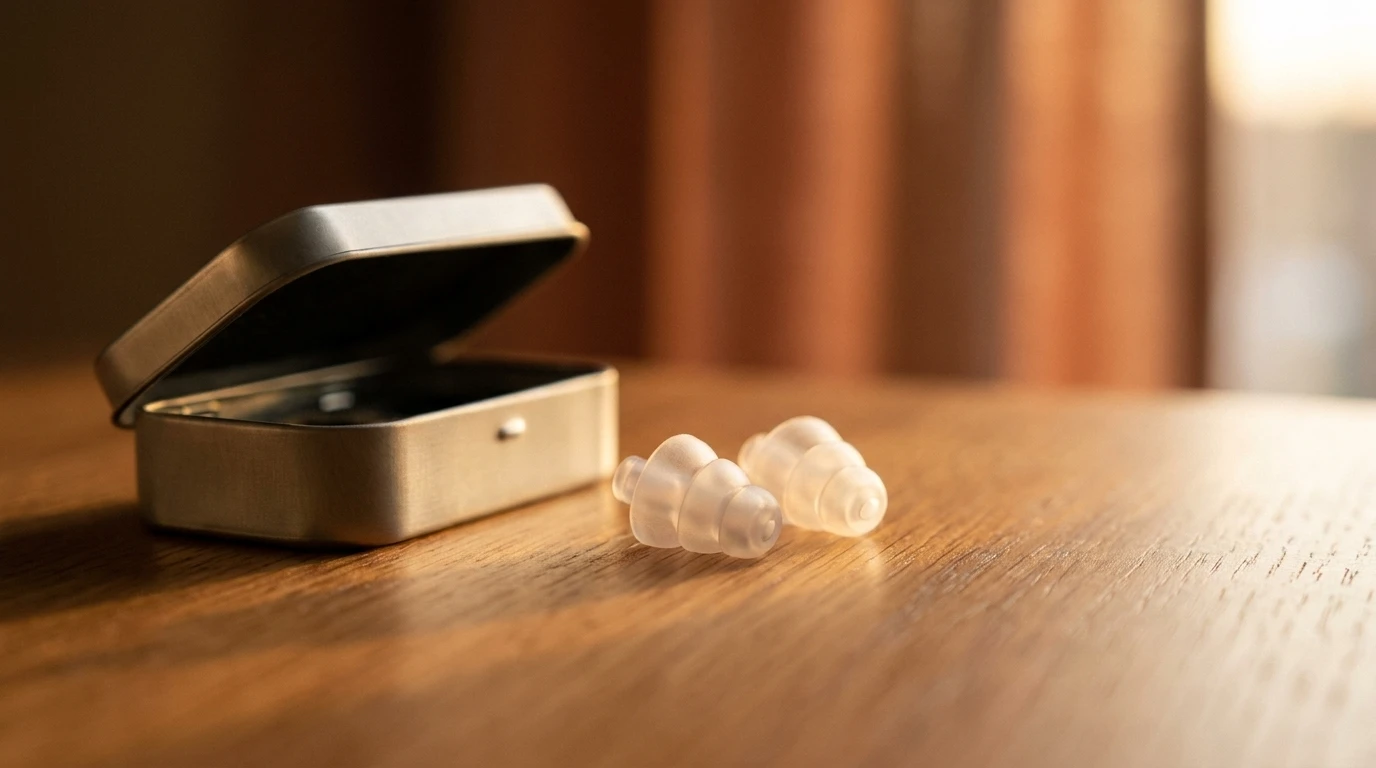
When a show starts to feel too loud, the quick fix is usually improvised: a rolled-up piece of tissue, or the same foam earplugs you’d use to sleep. The problem is that kind of earplug cuts far more of the high end than the low end, so what you hear ends up flat and dull, stripped of detail, as if someone turned down the sparkle in the music. Earplugs made for concerts and live shows work differently: they bring the overall volume down evenly across the spectrum, so you still hear the mix roughly as it’s meant to sound, just quieter. It’s not a marketing difference, it’s a design one: one type is built to shut everything out, the other is built to let you actually enjoy what you’re listening to without paying for it the next day.
The Habit of Taking a Break and Stepping Back from the Speakers
Beyond the right earplugs, two simple habits change the experience quite a bit. One is stepping back from the speakers instead of standing right next to them, especially near the stage, where the level tends to be noticeably higher than a few rows back. The other is taking a short break during the show — stepping out to the lobby, the bar, or outside, and coming back later. You don’t need to miss anything important for those minutes to help; leaving the loudest zone for a bit gives your ears some room to recover before you head back in.
Headphones for Hours: Turn It Down When You Stop Hearing What’s Around You
Headphones are a different challenge because there’s no single event that starts and ends — it’s a habit that stretches across hours of work, commuting, or studying, creeping up so gradually you barely notice. A practical rule that works better than any number on a screen is paying attention to whether you’ve stopped hearing what’s going on around you: if someone talks to you and you don’t notice, if you miss the doorbell or someone calling your name, that’s a pretty clear sign the volume crept up more than it needed to. Turning it down at that point doesn’t cost you anything you were actually hearing, and it saves your ears from ending the day more tired than they had to be.
This idea — that intensity and time combine, and that ears get tired in ways you don’t always notice in the moment — is something fairly well studied in general; if you want the details with sources, we cover it on our evidence page.
If Something Feels Different and Sticks Around, That’s for a Professional
Everything above is everyday habit, not a medical check. If you ever notice something different about your hearing and it doesn’t go away, the right move isn’t to sort it out on your own or with an app — it’s to bring it to a health professional. No amount of good habit replaces that, and that’s fine: habits are for day to day life, and figuring out what’s actually going on is a professional’s job, not an article’s.
None of this calls for drastic changes, just a bit more attention to habits you already have: how long you stay somewhere loud, which earplugs you reach for when it counts, and when to turn your headphones down. If after a day like that you’re looking for a quiet bit of background sound to let your ears rest, you can build your profile and try it right from your browser, no install needed, at my.tonaleve.app.
Keep reading
Why the Silence of the Night Feels Louder
No new sounds show up at night: the background noise that used to cover them drops. Here's why that happens and what to do about your sound environment.
Should You Sleep With Sound All Night, or Turn It Off?
Leaving the sound on until morning and cutting it with a timer are not the same call, and the answer depends on when you wake up. Volume, headphones, and what to do at 3 a.m.

How to Build a Sound Environment for Sleep
Before you pick a background sound for sleep, it helps to notice which noises actually reach your bedroom and when. Here's how to build that environment, step by step.